
The Short Answer
CLO 3D fashion design pricing depends on how much development work your garment needs before it becomes a clear, production-ready file. A simple garment with an existing pattern costs less than a complex style that needs pattern development, fit revisions, fabric simulation, multiple renders, animation, and a complete tech pack.
Instead of asking only for "a 3D render," it helps to ask what stage your style is in. Do you already have a pattern? Do you need a manufacturer-ready tech pack? Do you need realistic fabric behavior? Do you need one image, a full set of views, or a movement animation?
Those answers shape the price.
What Affects CLO 3D Design Pricing?
1. Garment Complexity
A T-shirt, skirt, or simple top is faster to build than a tailored jacket, bridal outfit, layered dress, activewear set, or garment with complex panels. More construction details mean more pattern work, more simulation time, and more checking.
Details that increase complexity include:
- Multiple layers
- Pleats, gathers, ruffles, or drapes
- Lining, padding, or structured panels
- Complex collars, cuffs, pockets, or closures
- Embroidery, prints, trims, or placement graphics
2. Pattern Readiness
If you already have a correct 2D pattern, the CLO 3D workflow can move faster. If the pattern needs to be created from sketches, measurements, or a reference image, the project includes pattern development as well as 3D simulation.
For production, this step matters. A beautiful render is useful for presentation, but a strong pattern is what helps the manufacturer make the garment correctly.
3. Number of Renders and Views
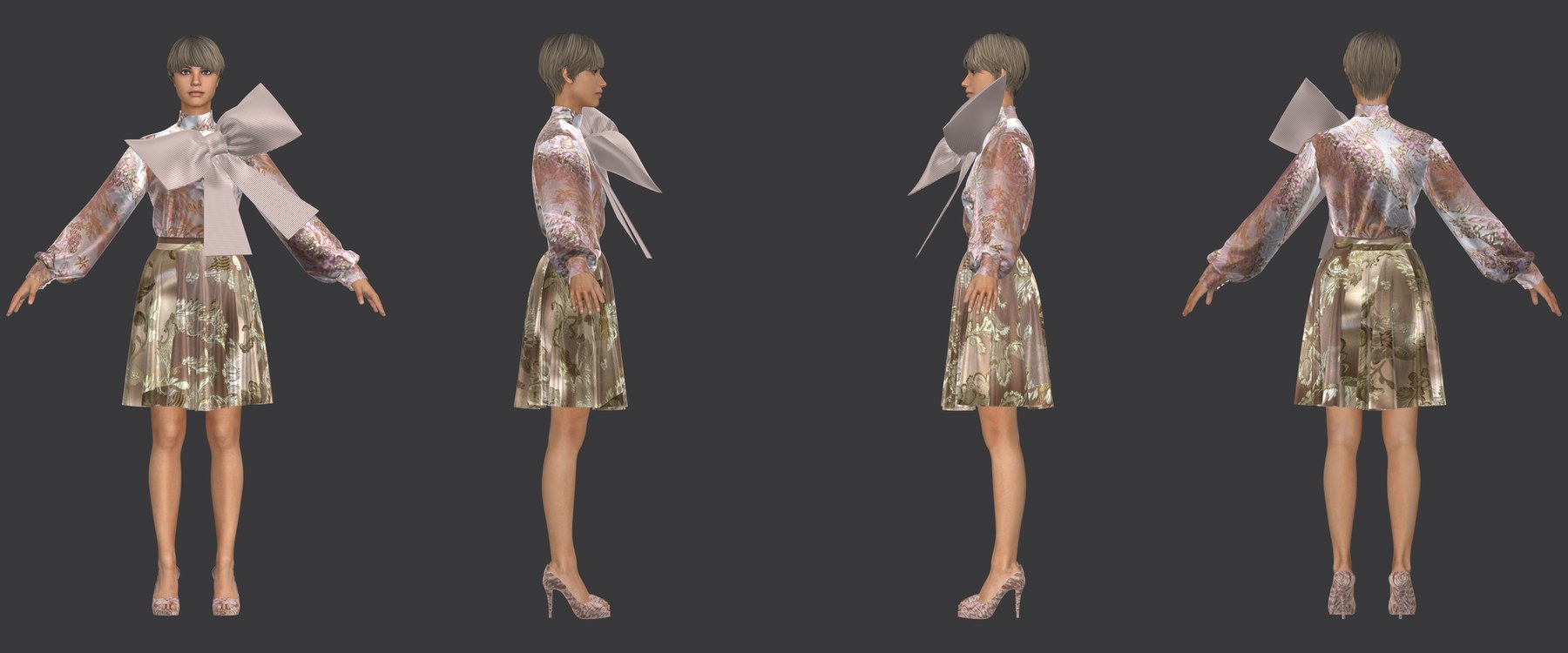
One front render is different from a full set of presentation images. A brand may need front, back, side, detail closeups, color variations, and avatar views for buyer decks or e-commerce.
More views usually require more styling, lighting, camera setup, and quality checking.
4. Fabric Simulation and Fit Revisions
CLO 3D is powerful because it can show drape, fit, volume, and movement. But accurate simulation depends on fabric behavior, pattern balance, avatar measurements, and revisions.
If you need fit feedback, this becomes a development process, not just a visual render.
5. Tech Pack and Production Handoff
Many brands need more than 3D visuals. They need files a factory can follow:
- Flat sketches
- Measurement charts
- Bill of materials
- Stitching and construction details
- Trim and label placement
- Pattern files
- CLO 3D files
- Render references
This adds cost, but it also reduces confusion during sampling and production.
6. Animation or Marketing Assets
Garment animation, walk cycles, turntables, reels, and launch visuals are separate from still renders. They require motion setup, camera direction, timing, export settings, and sometimes additional styling.
These assets are helpful when you want to present a garment before physical production.
Why the Cheapest Option Is Not Always Cheaper
Cheap CLO 3D work can become expensive if the pattern is not accurate, the render does not match the intended fabric, or the factory cannot understand the handoff files. In fashion development, unclear files often create more sampling rounds, more messages, more delays, and more wasted fabric.
A good CLO 3D workflow should save time, reduce sampling waste, and help everyone understand the garment earlier.
How to Get a Clear Quote
To get an accurate quote, prepare:
- Sketches or reference images
- Existing pattern files, if available
- Fabric details or fabric references
- Size range
- Render requirements
- Whether you need a tech pack
- Whether you need animation
- Timeline
Even rough references are enough to start the conversation.
Work With Veragya
Veragya helps fashion brands turn early ideas into CLO 3D renders, 2D patterns, tech packs, animations, and production-ready handoff files. If you have sketches, references, or a sample garment, send them through the contact page and we will recommend the right workflow for your project.
FAQs
Can CLO 3D replace a physical sample?
CLO 3D can reduce the number of physical samples needed, especially during early development and approval. For final production, many brands still make a physical sample, but they reach that stage with clearer decisions and fewer changes.
Do I need a pattern before starting CLO 3D?
No. Veragya can work from an existing pattern or help develop a new one from sketches, measurements, and references.
Can CLO 3D files be used by manufacturers?
Yes, but manufacturers usually also need supporting production documents such as patterns, measurements, construction notes, and a tech pack.
Is CLO 3D useful for small fashion brands?
Yes. It is especially useful for startups and small brands because it helps preview designs, make decisions faster, reduce sampling waste, and present ideas professionally before production.